Do you give much thought about your window treatments or just opt for what was there before? The thought process behind choosing a window treatment involves balancing practical requirements and aesthetic desires. There is so much to think about and the type of window treatment you use can set the tone for the space and needs careful consideration.
There are practical as well as aesthetic reasons for having a window treatment. For example, if you have young children and you don’t want them waking up as the sun comes up a blackout blind or curtains with a blackout lining may be a good solution. You may live in an old draughty home with single glazed windows then heavy curtains with thermal lining would be a good choice. You may want to filter daylight when it’s too bright or shield computer and TV screens from glare therefore a light filtering roman blind could be an option. You may have rooms that are overlooked, and you need privacy but also want to let the light in so café curtains or half shutters may be your preferred choice. Curtains are perfect for improving the acoustics for a large open plan area. Lastly the decorative appeal of the window treatment is important and there are endless design possibilities to enhance a room’s aesthetics especially with curtains and pelmets. You may want to use a curtain and blind together or in some cases have no window treatment at all.
Once you have considered both the practical and aesthetic considerations of choosing a window treatment you haven’t stopped there, I’m afraid there are more endless decisions to make.
Curtains
• Type – Pencil pleat, pinch pleat ( double or triple), cottage pleat, flop over frill, eyelet, wave fold ,café style, dresser style, double rod pocket.
• Pole or Track? – French, straight, rings or gliders,? material wooden, metal, colour, finial option, motorised, shape.
• Position of pole or track – get this wrong and it could spoil the whole look.
• Length – short, medium-length, full-length, puddling.
• Lining – without, black out, thermal, interlining etc.
Blinds
• Type– roller blinds, roman blinds, relaxed roman blinds, roll up blinds, venetian blinds (metal, wood, faux wood ), vertical blinds panel, pleated.
• Position – in the recess, outside recess (with integral return?)
• Lining – unlined, blackout, thermal, light filtering.
• Mechanism – motorised, manual, control location, material of lifting mechanism (nickel, white, bronze etc)
Shutters
• Type – plantation, solid, café, full height, tier on tier, french door, solid and louvered, solid shaker, special shape, bi-fold, sliding.
• Material – hardwood, MDF, natural wood or painted, louver size
Fabric
• Type – linen, cotton, velvet, polyester, voiles and sheers etc
• Design style- plain, stripes, checks, dots, geometric, embroidered etc
Example
This project is a good example of the decision-making process, the different choices that need to be made and challenges that may be faced.
Design Brief – to create a calm, relaxing bedroom that is light and airy during the day but a cosy retreat at night.
Observation
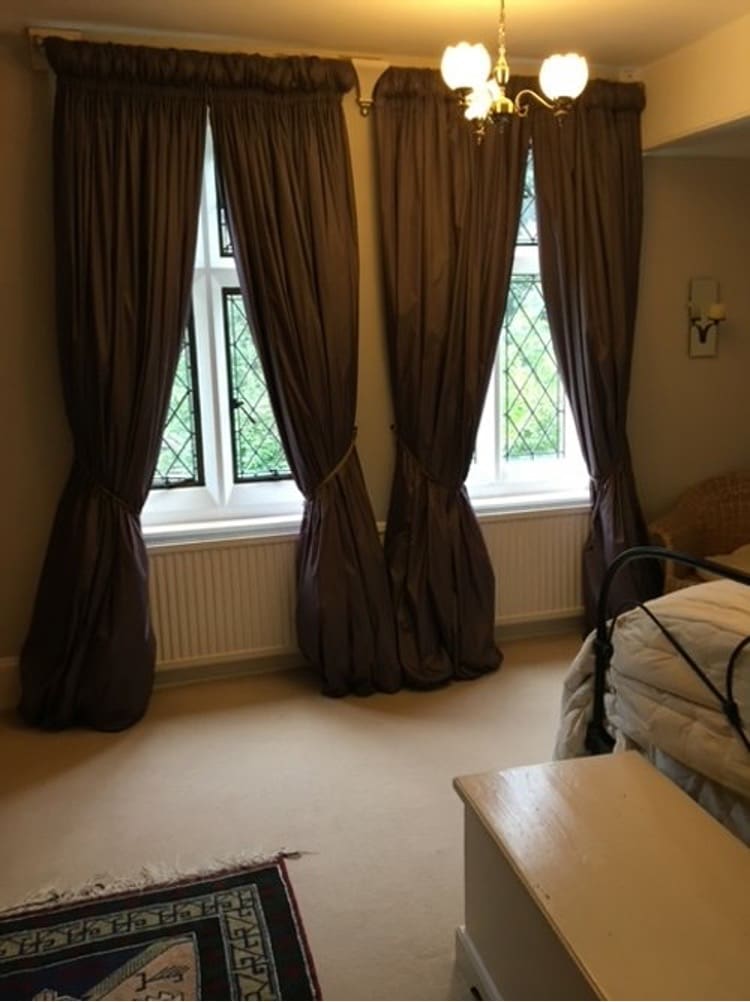
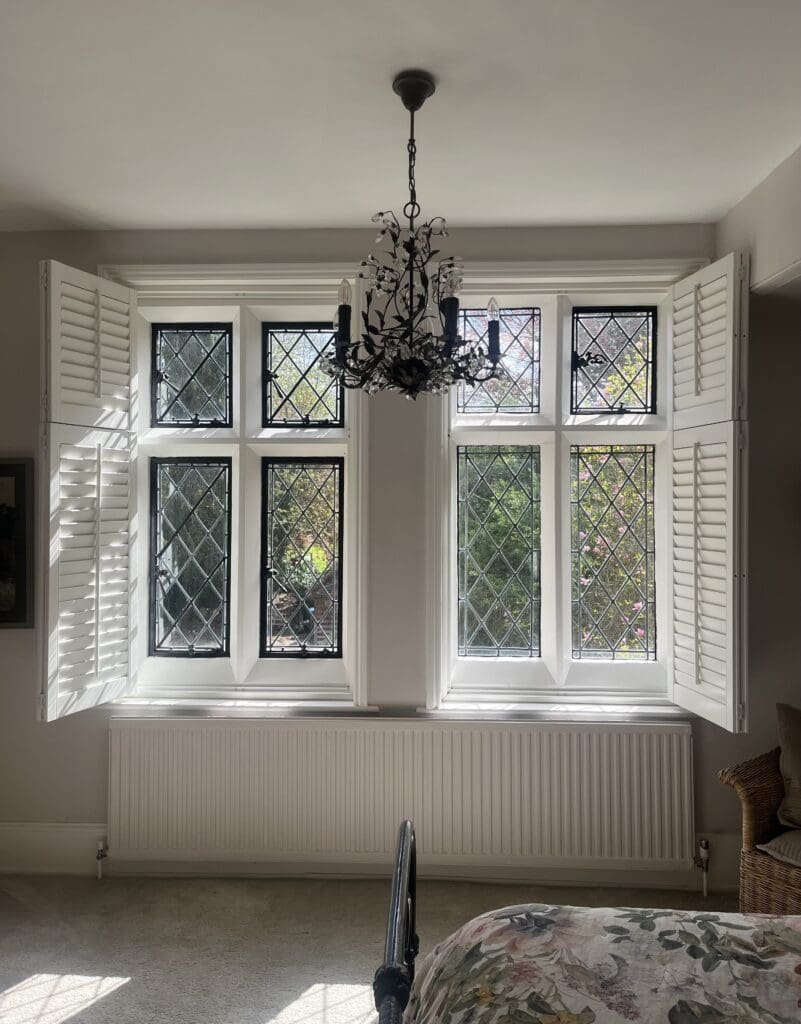
The room is east facing so receives the early morning light. The two sets of beautiful stone mullion single glazed windows are currently been obscured by the dark heavy curtains. There appears to be a change in ceiling height to the right side. The room is not overlooked, and the windows look out onto the garden. There is a radiator under the windows.
Requirements for the window treatment
To control the light entering the room, to enhance the architectural features of the window, provide a degree of insulation as the windows are single glazed
My initial thought was to have both roman blinds ( sheer) and a set of curtains hung outside the frame of the window to let maximum amount of light and maximise the architectural features. However, due to the drop in ceiling height it wasn’t going to be possible to hang the curtains outside of the frame. An alternative would be to have a pair of roman blinds with black out lining. However, due to the height of the window the roman blind when stacked would obscure the top part of the window which would be a shame. Another option would be to have a black out roller blind and then maybe very light weight sheer curtains however that would not provide much insulation.
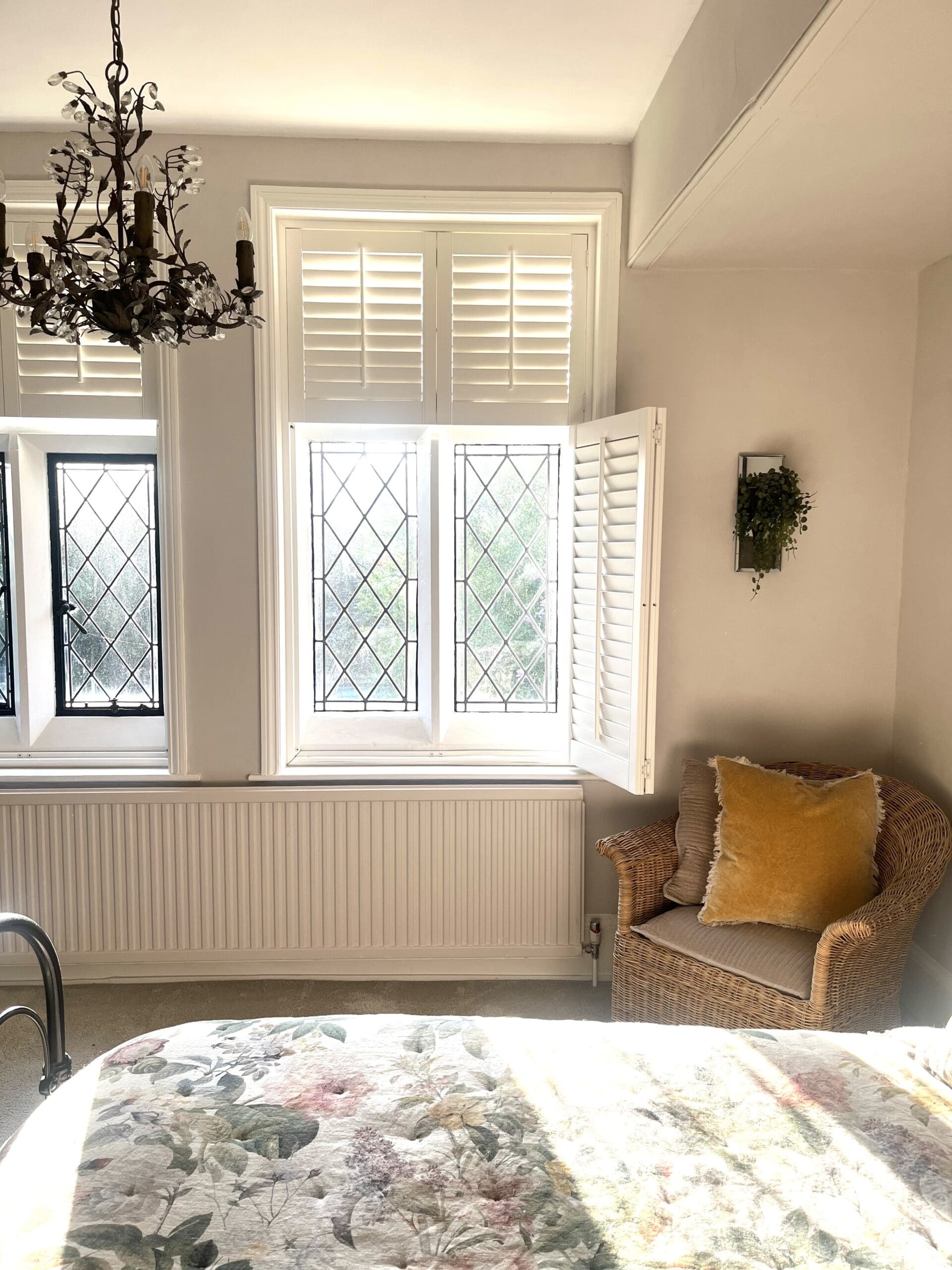
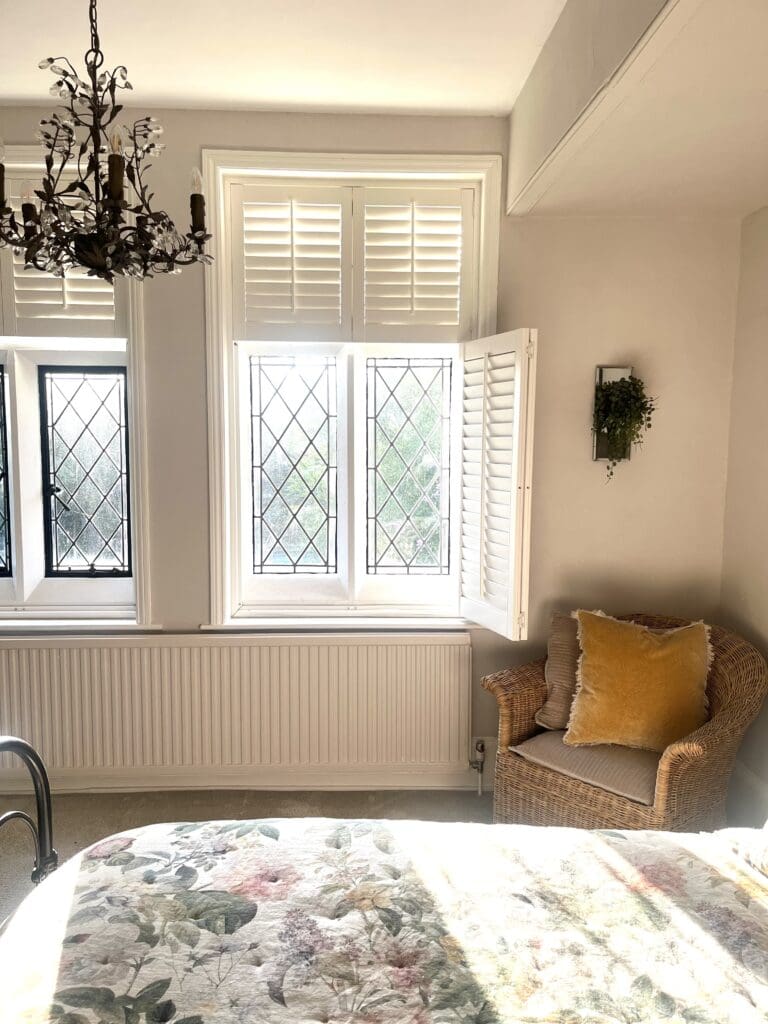
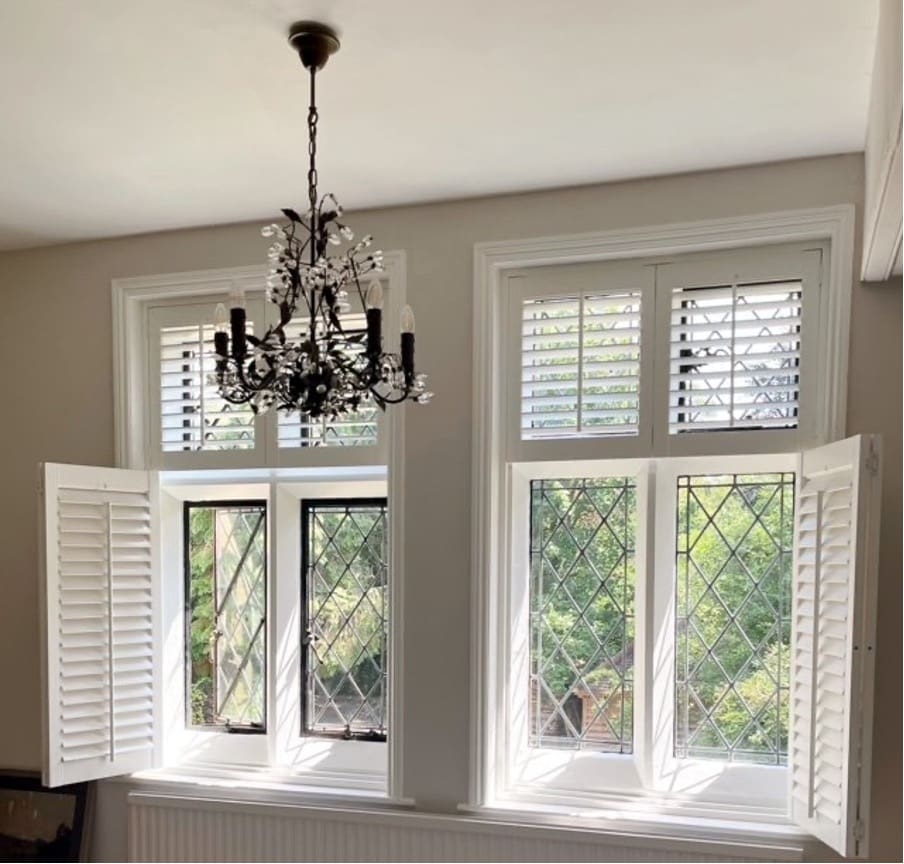
So after much deliberation – my solution – to have plantation shutters. When opened back you can see the beautiful mullion windows allowing the light to flood in and at night they can be closed for privacy. The slats can be tilted to control the amount of light and importantly they provide a degree of insulation. As the shutters are not providing soft texture and pattern it is important that these elements are incorporated into the rest of the design.


If you'd like to work with me or have any questions about my services, please click the button below to send me an email.
CONTACT ME
Serving Tring, Berkhamsted, Wendover, AND surrounding areas across Bucks, Herts, AND North London.
